Solution capability in civil protection – where does Continest fit in the picture?
Humanitarian emergencies happen suddenly and escalate rapidly. To prepare for such situations, numerous nations are participating in systematic acts of civil protection: establishing measures of specific governmental aid and assistance. This entails providing vital supplies and specialised rescue, assessment and coordination teams, as well as repatriation of EU citizens.
Large-scale emergencies like these need more than rapid action. They need a system. This is why solution capability is a focal point of safe, effective and sustainable systems of civil protection – holding the ability to maintain preparedness and to react rapidly in the event of crisis is fundamental.
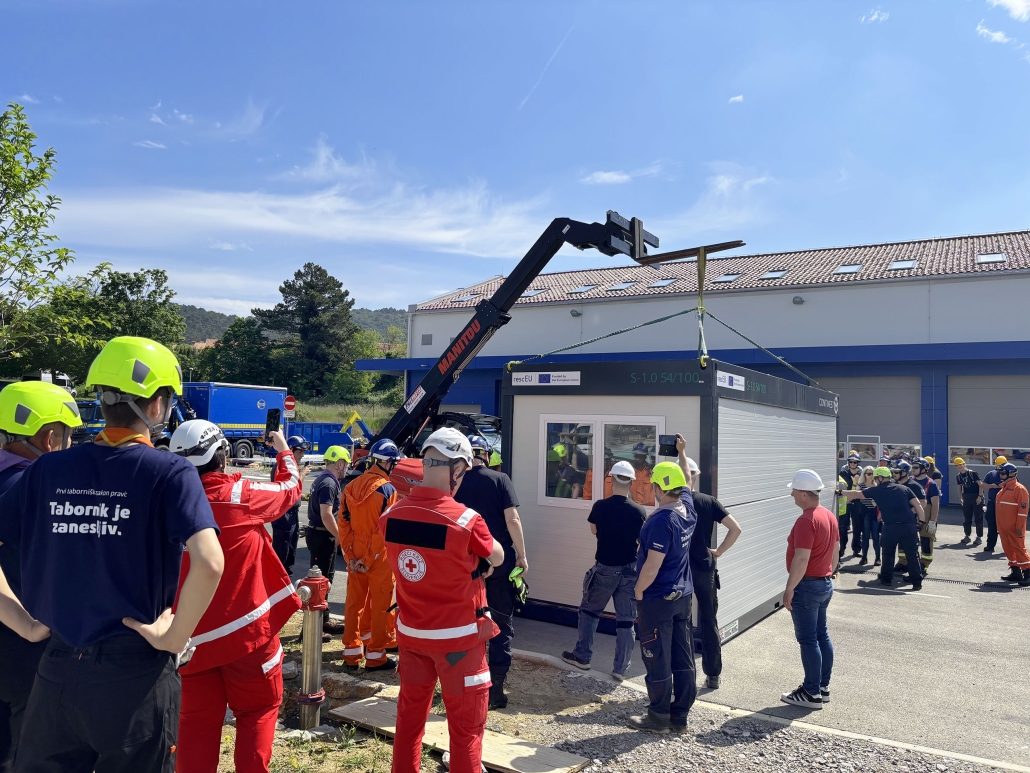
Every minute counts – what is civil protection?
According to the European Commission civil protection is governmental aid delivered in preparation for or immediately after a disaster strikes in Europe and worldwide. This encompasses coordinated assistance in case of a sudden emergency – backed by structured preventive measures, preparedness to act immediately, and a system that monitors emergencies round the clock.
This is a system that enables control over unpredictable chaos, as well as provides a blueprint for action. Because every minute counts – and there’s little room for error.
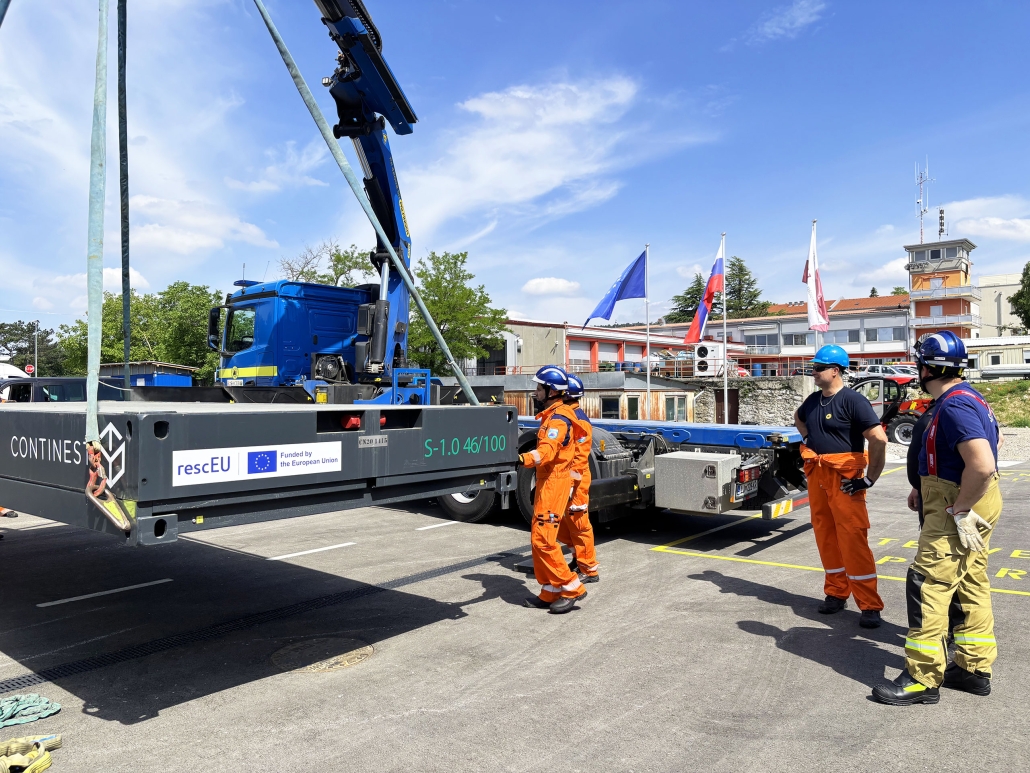
Preparing for emergencies means establishing complex systems that make rapid response seamless
In the past decades, there have been EU-wide efforts to establish a system of emergency response that facilitates a well-coordinated joint response – this is especially important when the disaster affects multiple nations at once. Since its launch in 2001, the EU Civil Protection Mechanism has responded to over 830 requests for assistance both inside and outside the EU. Authorities of the affected country or countries also have the chance to communicate effectively through a single channel, which mitigates disorganisation.
This mutual, international effort continues to emphasise the significance of disaster-readiness and the responsibility of upholding baseline standards. It also proves that appropriately configured systems are undeniably the foundation of structured aid.
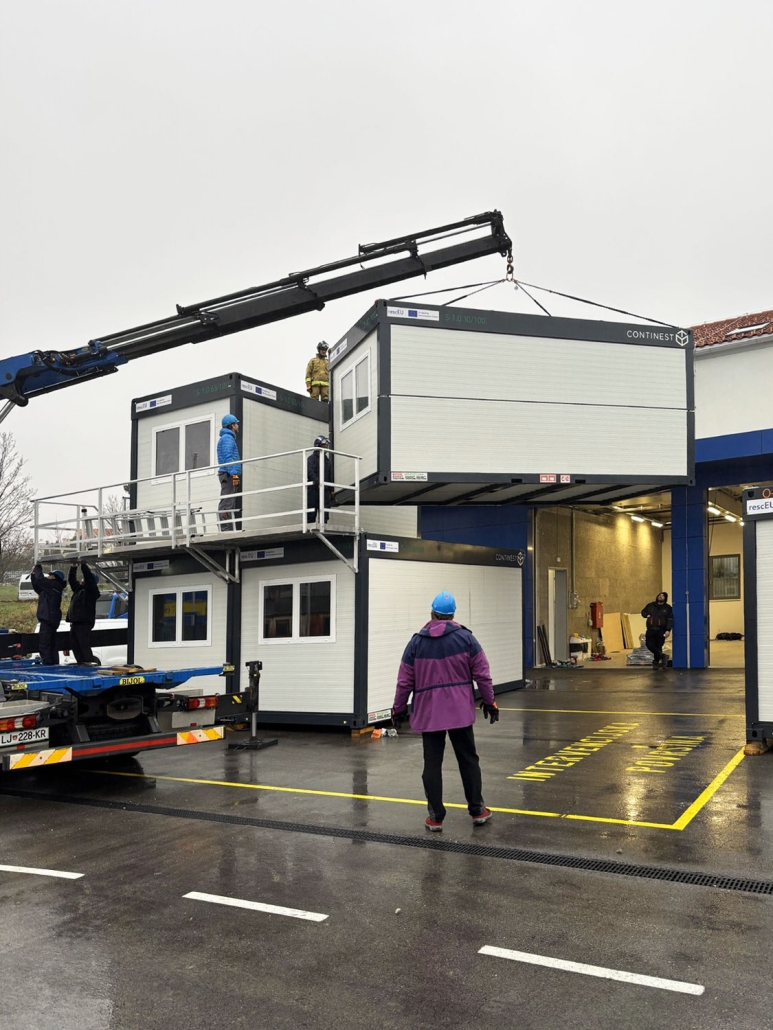
Modular buildings under construction: a reusable and effective system of civil protection
Solution capability in civil protection
But what enables emergency preparedness to be as seamless, well-coordinated and sustainable as possible? It is a perspective that takes into account the complexity and gravity of such situations. With a time constraint present, organized action and fast relief are first priorities.
Key functions that support this:
- Rapid deployment capability
- Efficient transport and storage
- Operational readiness within hours
- Integration with international standards
- Sustainability and reusability
- Compatibility with multi-agency environments
In large-scale emergencies, infrastructure is often the first bottleneck. Temporary bases for rescue teams, medical facilities, command centres, accommodation units or logistics hubs must be established quickly, often in remote or devastated areas.
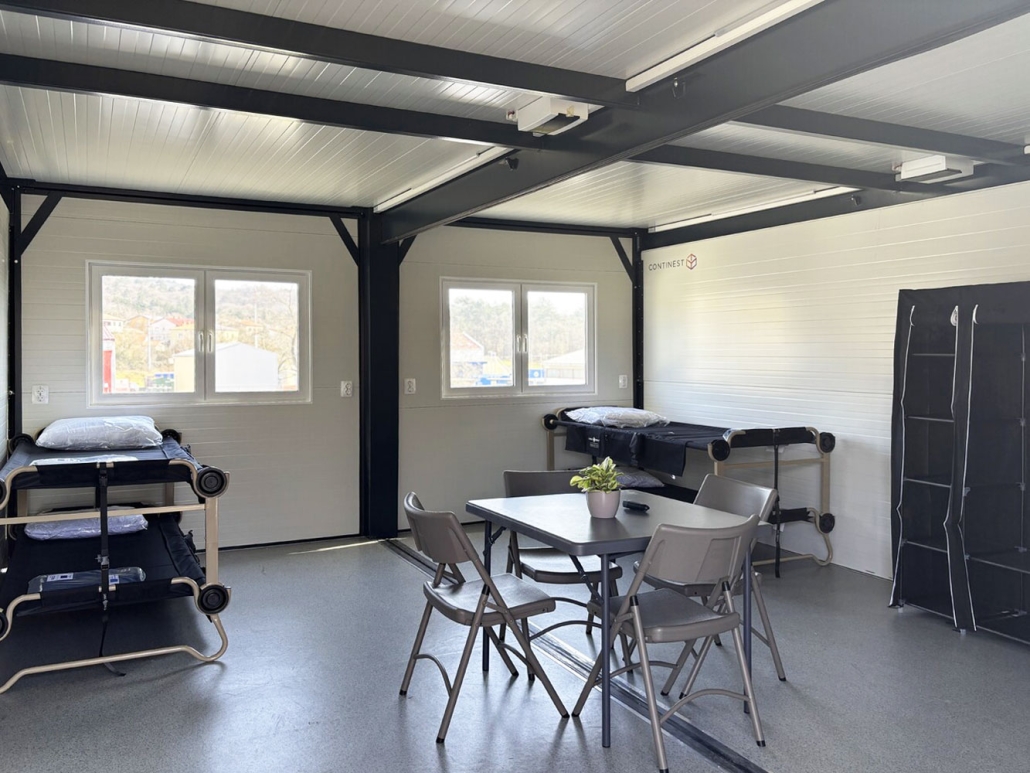
Interior of a Continest building with diverse functional use cases
The challenge is not only to provide shelter – but to deliver deployable infrastructure that:
- minimises transport volume,
- reduces on-site assembly time,
- ensures structural stability and safety,
- and remains trustworthy and cost-efficient over repeated missions.
This infrastructure dimension is frequently underestimated, yet it fundamentally determines the effectiveness of civil protection operations.